Hypercritical
EV Stupidity Checklist
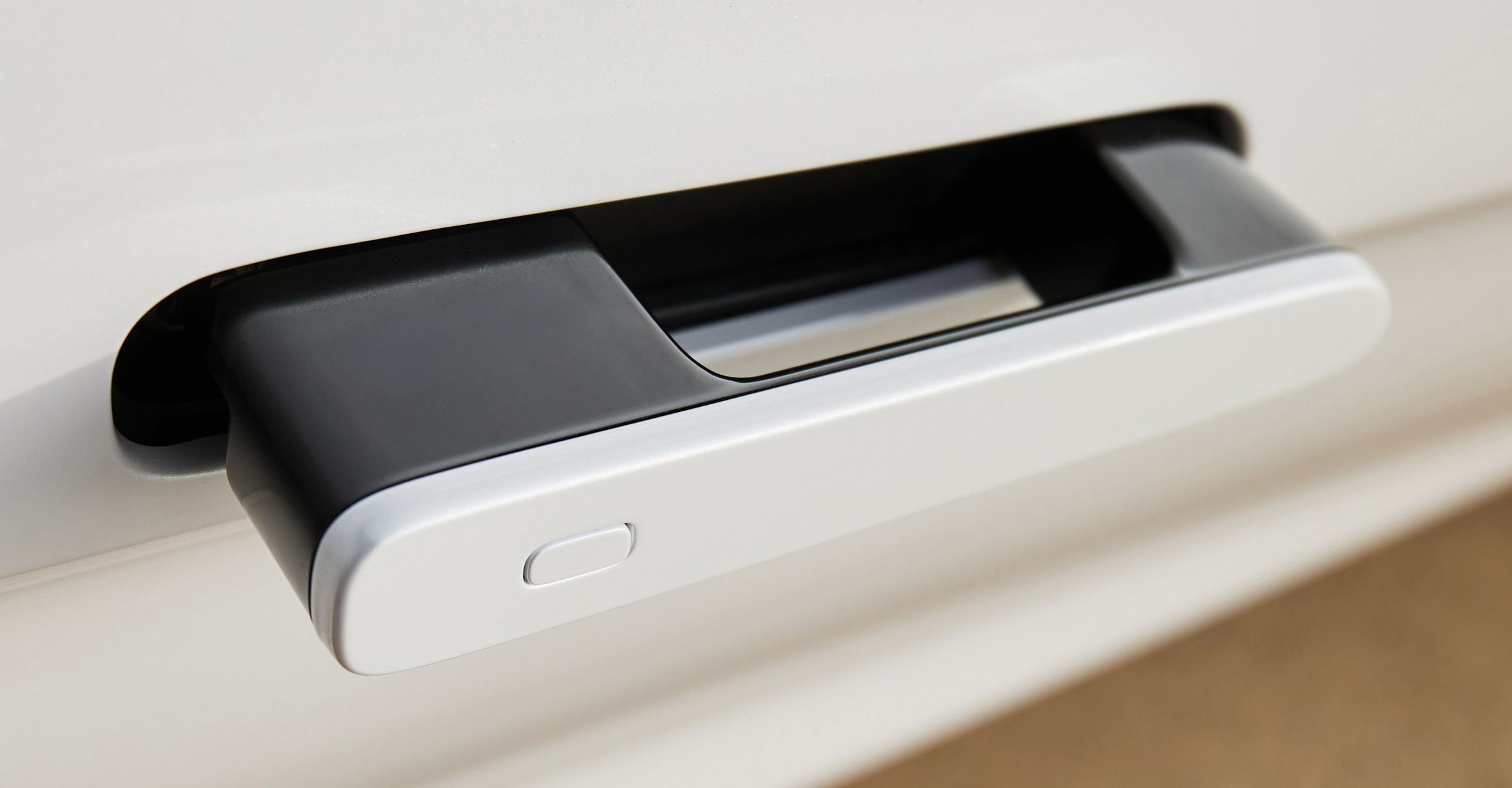
Automobiles have been around for well over a century. During that time, we’ve gotten pretty good at designing and building their basic components and controls: seats, doors, pedals, steering wheels, mirrors, etc. But when today’s automakers decide to make an electric vehicle (EV), they seemingly forget much of what they once knew, creating new versions of features that are objectively, obviously worse than the time-tested designs they replace.
When Tesla ushered in the modern EV era in the early 2000s, some of these changes made sense, at least from a marketing perspective. To convince a cautious public to consider an EV, the vehicles had to appear “futuristic.” Flush door handles that automatically extend when you approach the car are definitely cool and fancy! But electronic door mechanisms like these have also proven to be unreliable, and possibly dangerous.
On the interior, Tesla settled on a minimal design dominated by a large touch screen. Touch screens provide a lot of flexibility. This is why our phones no longer have physical keyboards on them. Touch screens are also, perhaps surprisingly, less expensive than the array of physical buttons and switches that they replace in car interiors. This savings is especially important on EVs, where the cost of the vehicle is dominated by the battery (yes, to an even larger degree than an internal-combustion car’s cost is dominated by its engine). But despite their cost savings, the over-use of touch screens in cars has proven unpopular. They’re also not great for safety.
In 2026, we’re well past the time when EVs need to compromise safety and functionality in order to appear futuristic. As for the cost savings, well, that’ll be harder to shake. Once automakers got a taste for cheap touchscreens, they spread to all cars, not just EVs.
To help the industry get back on the right track, I’ve created a checklist for car designers. Make sure your new car—EV or otherwise—checks all these boxes to avoid making the same stupid mistakes that have plagued modern cars for years.
- Accessible exterior door handles.1 When approaching a car, the door-opening mechanism should be obvious and immediately usable. You should not have to wait for a sensor to detect your presence and then activate some mechanism before the door is able to be opened.
- Physical door opening mechanisms. The thing you pull to open the door should be physically connected to the door-opening mechanism. It’s fine to have the door handle activate an electronic door opener, but pulling that same handle farther and harder should activate the physical mechanism. This applies to both…
- Interior
- Exterior
- Door handle affordances. In design, “affordance”
refers to the possible actions that can be readily perceived. When approaching a door, it should be readily apparent what you must do to open it. You should be able to see the door-opening mechanism, and it should be obvious how to use it. So many modern cars—and especially EVs—fail this test! There’s even a Saturday Night Live sketch about it. And, again, this applies to both…
- Interior
- Exterior
- Physical charge-port door mechanism. For decades, cars have had small doors covering the place where fuel is added. We’ve gotten pretty good at making cheap, reliable fuel-filler doors. When carmakers design EVs, they all-too-frequently decide that the door that covers the charge port should be entirely electronic, opening and closing under its own power in response to a touch-screen input or a finger-swipe somewhere on the exterior of the car. We are currently not very good at making these electronic charge-port doors work reliably. They add nothing to the car beyond extra cost and “pizzazz.” This is a poor trade-off for even the tiniest decrease in reliability of such an important function.
- Turn signal stalk. While there are arguments to be made for including various controls on the steering wheel itself, especially in sporty or race-inspired cars where removing your hands from the steering wheel for even a moment might be unwise, a stalk on the steering column is still the best overall choice for activating (and de-activating) turn signals. No experienced driver during normal driving has ever had to spend even a moment searching for the turn signal stalk to activate it, but this happens all too often when using turn-signal buttons on a steering wheel, especially when the wheel is rotated some arbitrary amount at the time the turn signal is needed. Stalks are great. Use them.
- Physical buttons on the steering wheel. Speaking of controls on the steering wheel, when adding these, use physical buttons, not touch-sensitive controls. The driver’s hands are all over the steering wheel during normal use. There should be no possibility that merely brushing against a part of the wheel will inadvertently activate some feature of the car. Furthermore, the driver should be able to feel for controls on the steering wheel without looking at them. Use real, physical buttons and switches on the steering wheel.
- Physical controls for temperature and fan speed. Climate controls are frequently used. These controls should be physical so their location never changes and so they can be used without looking at them. No, making the climate controls “fixed and always visible” on the touch screen is not the same thing.
- Physical controls for air flow and direction. Grabbing a vent control and pointing it in the desired direction is much more obvious and efficient than navigating a touch-screen menu and then dragging your finger on a visualization of the car interior to try to direct the air flow. By all means, have electronically actuated vent controls to change the air flow for vents that are unreachable from the driver’s seat, but all vents should be physically controllable by the people who can reach them.
- Physical glove box opening mechanism. One of the more astoundingly stupid features in many EVs is a glove box that can only be opened by using the touch screen. Truly, the mind boggles. One step up from that is a glove box that is opened via a button, but that button activates an electronic release. Someday, I expect electronic door releases to be as reliable as physical door mechanisms, but we’re not there yet. Glove boxes should have simple, obvious, physical opening mechanisms.
- Rearview mirror. An actual, real rearview mirror should exist in any vehicle that has any sort of rear visibility. Rearview “mirrors” that are actually screens are popular in fancy cars these days, but they’re worse than real mirrors in multiple ways. Screen technology cannot yet match the dynamic range and contrast of the real world.
But more importantly, current screen technology requires the driver to focus on the surface of the screen itself, which is mere feet away from their eyes. This is a large change in focal distance from looking at the road ahead. Actual mirrors allow the driver’s eyes to focus on the road behind the vehicle, rather than the surface of the mirror. This is a much smaller change in focal distance, and is therefore easier, faster, and more comfortable.
Until and unless screens can match all these beneficial attributes, real mirrors should remain a fixture in cars. (In the meantime, feel free to add cool night-vision camera views or other digitally enhanced screen views as an option on top of the actual mirror.)
- Rear window. Vehicles that can have a rear window should have a rear window. Yes, I’m looking at you, Polestar 4. “Mirror screens” aren’t enough. (See previous item.)
- Side-view mirrors. US law still mandates side-view mirrors, but other countries do not. Carmakers have pounced on this opportunity to make their most expensive cars worse by using side-view cameras instead of mirrors, with screens on the interior to show what the cameras see. Screens are poor replacements for actual mirrors, as discussed earlier.
I hope the auto industry’s EV-induced fever breaks soon, so every new car doesn’t have some previously working feature broken for no good reason. If you know a car designer, please print this checklist and send it to them. The world will thank you.
Many of the checklist items involve door handles. Automakers often cite aerodynamic efficiency to explain their bad door handle designs, but it's a terrible excuse. First and foremost, flush door handles that are entirely mechanical do exist. Second, the extra range provided by flush door handles is negligible, even at sustained highway speeds (and near zero at slower speeds). Third, and most damningly, the standard wheels and tires on most EVs hurt range way more than any door handles. Smaller wheels and tires with smoother outer surfaces are a huge win for efficiency, but those are usually unpopular options on EVs rather than standard equipment. Meanwhile, sane door handles aren't an option at all. ↩